Lake Wylie Waterfront Or Off-Lake: How To Decide
June 11, 2026
June 11, 2026
Wondering whether Lake Wylie living should mean a home on the water or simply a home near it? That question matters more than many buyers expect, because on Lake Wylie, “waterfront” is not just a view. It is a specific lot type with different access, maintenance, and ownership considerations. If you are trying to decide which path fits your lifestyle and budget, this guide will help you compare the real tradeoffs and make a smarter move. Let’s dive in.
Lake Wylie stretches across the South Carolina and North Carolina border between Rock Hill and Charlotte. According to the South Carolina Department of Natural Resources, the lake covers 13,433 acres, has about 325 miles of shoreline, and reaches a maximum depth of roughly 94 feet. It also has five public boat access areas in South Carolina and three marinas with pumpouts.
That scale gives buyers options, but it also creates an important reality. Shoreline is limited, and not every property near the lake offers the same type of access or usability. A waterfront lot and an off-lake home may both give you the Lake Wylie lifestyle, but they do it in very different ways.
Because the lake is owned and managed by Duke Energy, shoreline use comes with rules that do not apply in the same way to inland properties. Duke also notes that lake levels can vary depending on where you are on the reservoir. That means two waterfront homes can look similar online and still function very differently in real life.
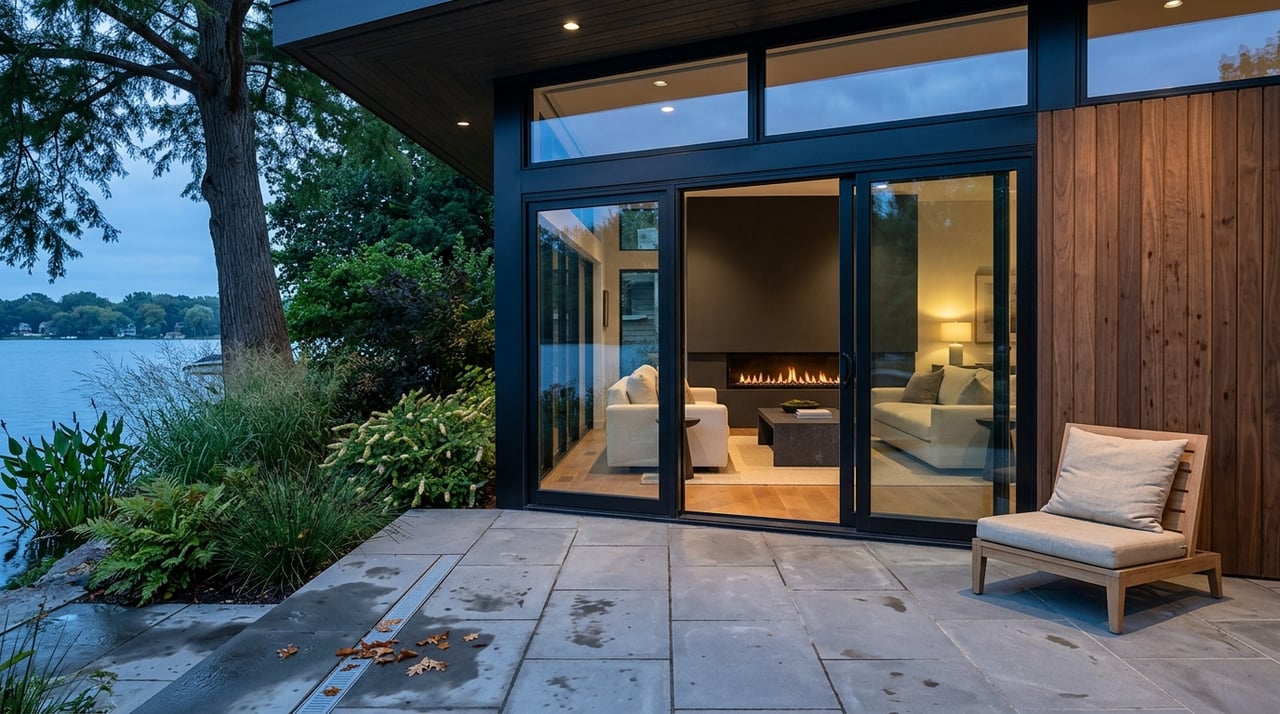
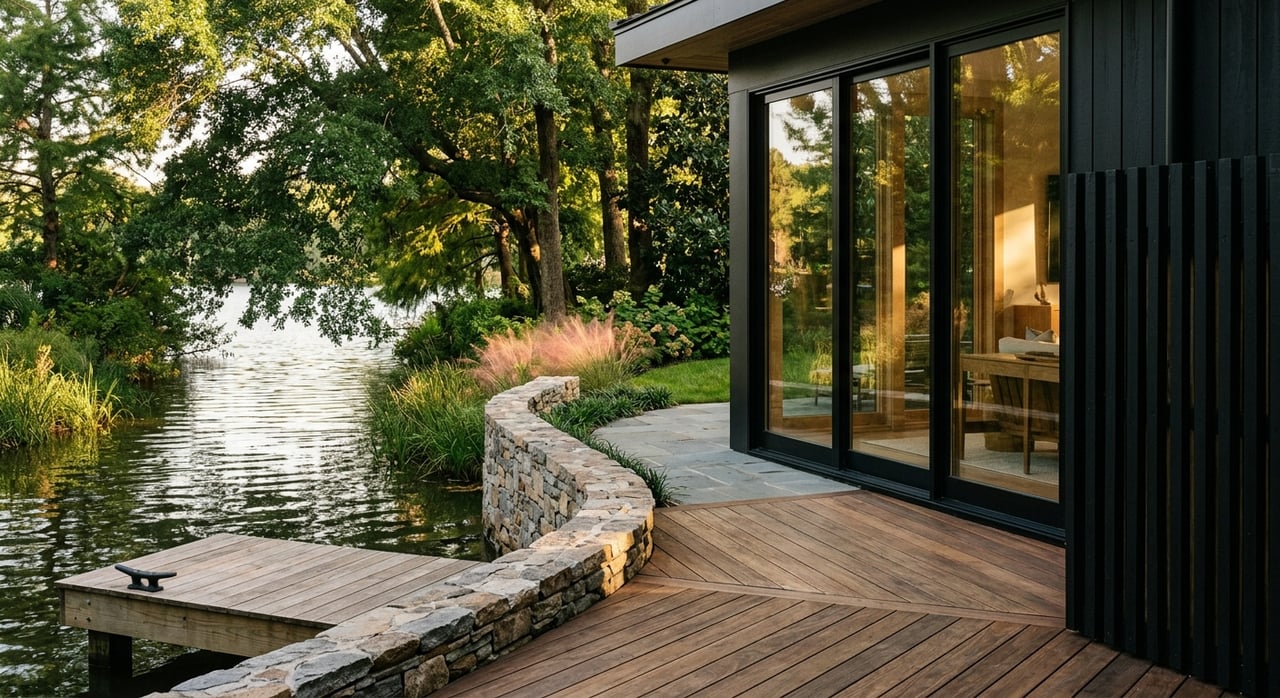
If the lake is part of your daily life, waterfront can be hard to beat. When a lot can support a dock or pier, you may be able to step outside and get on the water without loading up the car, driving to a ramp, or dealing with trailer logistics. That kind of convenience is often the main reason buyers decide to pay more for true waterfront.
For many buyers, the lot itself becomes part of the lifestyle. You are not just buying a house with a nice backdrop. You are buying a property where the shoreline may shape how you spend your mornings, weekends, and evenings.
Waterfront property is limited by nature, and Lake Wylie is no exception. Research in the report shows that waterfront and water-view parcels often command a premium because supply is scarce and demand stays strong. One study cited in the report found that the ability to build and use a dock carried nearly a 45% premium compared with properties that could not support one.
That does not mean every waterfront property performs the same way. It does mean buyers should think beyond the house itself and look closely at what the lot actually offers.
One of the biggest differences with waterfront ownership is regulation. Duke Energy requires permits for shoreline activities such as docks, shoreline stabilization, and dredging. Its application materials also call for items like registered surveys and local permits, which adds a layer of due diligence before and after closing.
York County adds its own review process for Lake Wylie buffer work. The county application may require a survey, tree survey, and shoreline stabilization plan when applicable, and the review can take up to 10 business days. If you like the idea of private shoreline access, you also need to be comfortable with a more structured ownership experience.
Not all waterfront is equally usable. Duke states that lake levels can vary by location on the reservoir, and York County directs boaters to Duke’s lake-level information when ramps close. In practical terms, a dock or shoreline setup that works well in one part of the lake may not offer the same convenience somewhere else.
This is why lot evaluation matters so much on Lake Wylie. A waterfront address alone does not tell you everything you need to know.
Waterfront homes often involve more hands-on upkeep tied to shoreline improvements and access features. Even if the home itself is similar to an off-lake property, the ownership responsibilities can be different because shoreline work is more regulated. If you want the lake experience without those added layers, off-lake may feel simpler.
Off-lake homes generally trade private shoreline access for fewer complications. Since they are not tied to docks, shoreline stabilization, or lakefront permit review in the same way, they often offer a more straightforward ownership experience. For many buyers, that simplicity is a major plus.
You may also get more flexibility in how you use the lot and yard. The research report notes that this is a reasonable takeaway given the permit and review requirements that come with shoreline property. If your priority is easier day-to-day ownership, off-lake deserves a serious look.
On Lake Wylie, budget is not just about the price tag. It is also about what your dollars are buying. Waterfront buyers are often paying more for frontage, dockability, and water permanence, while off-lake buyers are often able to put more of their budget into the house itself and the land behind it.
That can matter a lot if your wish list includes more indoor space, a larger yard, newer finishes, or lower ownership complexity. For some buyers, being near the lake checks the right boxes without stretching for shoreline frontage.
Choosing off-lake does not mean giving up the lake. The South Carolina Department of Natural Resources lists five public boat access areas in South Carolina on Lake Wylie. York County’s Allison Creek access area has four ramps open 365 days a year, and the lake also has three marinas with pumpouts.
That makes off-lake living a practical middle ground for buyers who want regular boating or recreation without needing a private dock at home. You may give up back-door convenience, but you can still stay closely connected to the lake.
This is one of the most important points for Lake Wylie buyers. York County’s buffer materials require a survey showing details like the project boundary, bank, buffer edge, existing nonconforming structures, significant trees, and proposed activities. That tells you something important: slope, vegetation, shoreline condition, and access width can materially affect what a parcel can do.
In plain terms, two homes can both be marketed as waterfront and still offer very different real-world usability. One may support your plans well, while another may come with more limitations than expected.
If you are considering a waterfront property, it is smart to confirm whether any existing dock or shoreline structure is properly permitted. Duke’s shoreline FAQ specifically flags buying and selling lake property as a due diligence issue for shoreline structures. You also want to know whether permit status can transfer or be recreated if needed.
That step can help you avoid surprises after closing. It is one of the clearest places where local guidance and careful review matter.
If that sounds like you, waterfront may deliver the lifestyle you are really after. The key is to look closely at the lot, the access, and the permit history, not just the photos.
For many buyers, this is the sweet spot. You still get Lake Wylie as part of your lifestyle, but with fewer moving parts.
If the lake is central to how you want to live, true waterfront may be worth the extra cost and complexity. If you mainly want access to boating, views nearby, and an easier ownership experience, off-lake may be the smarter fit.
The right answer usually comes down to how often you will use the water, how important a dock is to you, and how much complexity you want to take on. On Lake Wylie, the best decision is rarely about “waterfront versus not.” It is about matching the property to your routine, budget, and comfort level with shoreline rules.
If you want help comparing specific Lake Wylie homes, evaluating lot usability, or narrowing down the best fit on the South Carolina side of the lake, talk to Gary Burkart first.
Stay up to date on the latest real estate trends.