The Booty Loop Just Turned 25. Here's What Didn't Change.
August 13, 2026
August 13, 2026
In 2001, a Charlotte cyclist named Spencer Lueders decided to ride his bike for 24 straight hours around the three-mile loop that runs through the heart of Myers Park. He wanted to raise money for cancer patients. Word got around the neighborhood, and something unplanned happened. Neighbors left their porch lights on through the night so he'd have something to see by. Cancer survivors who heard about the ride showed up and asked if they could join him for a lap. What started as one man's solo loop became, the following year, an organization: 24 Foundation.
Twenty-five years later, that same three-mile stretch of Queens Road West, Selwyn Avenue, and Queens Road hosted more than 900 riders, walkers, and runners from 85 teams across 22 states and three countries. This July's 25th edition of 24 Hours of Booty raised more than $1.6 million, pushing the event's all-time total past $33 million since 2002, according to WSOC's coverage of the milestone weekend.
Here's the part worth sitting with if you actually live on or near that loop: the dollar total barely moved from last year's $1.69 million, even as the event pulled in participants from three countries and a quarter of the states in the country. The fundraiser has scaled its reach far faster than its revenue. That's not a knock on the event. It's a clue about what the loop actually is to the people who use it, versus what it looks like to the people who fly in for one weekend.
The 24 Foundation's founder, Spencer Lueders, told The Charlotte Ledger this summer that the money raised now funds more than 60 supportive oncology programs at Atrium Health, everything from acupuncture and massage therapy to help getting patients to and from treatment, the kind of support insurance often skips. That's a specific, useful number. It also explains why the event has kept its shape for a quarter century instead of ballooning into something bigger and less personal.
The growth curve tells its own story. What began with one man on a bike in 2001 grew into an event that now regularly draws over a thousand cyclists and two hundred walkers in a given year. This year's 900-plus registered participants, spread across 85 teams, is roughly in that same range, meaning the event stopped growing in raw numbers years ago and started growing in geographic reach instead. People now fly to Charlotte specifically to ride a loop that residents jog on their lunch break.
"I have friends who are struggling with cancer today and I'm happy to be out here."
That's participant Fran Cook-Mahood, describing why she rode through a rain-soaked Friday night this July, as quoted by WCCB Charlotte. The weather didn't matter. The loop didn't need to be dressed up. It just needed to be there.
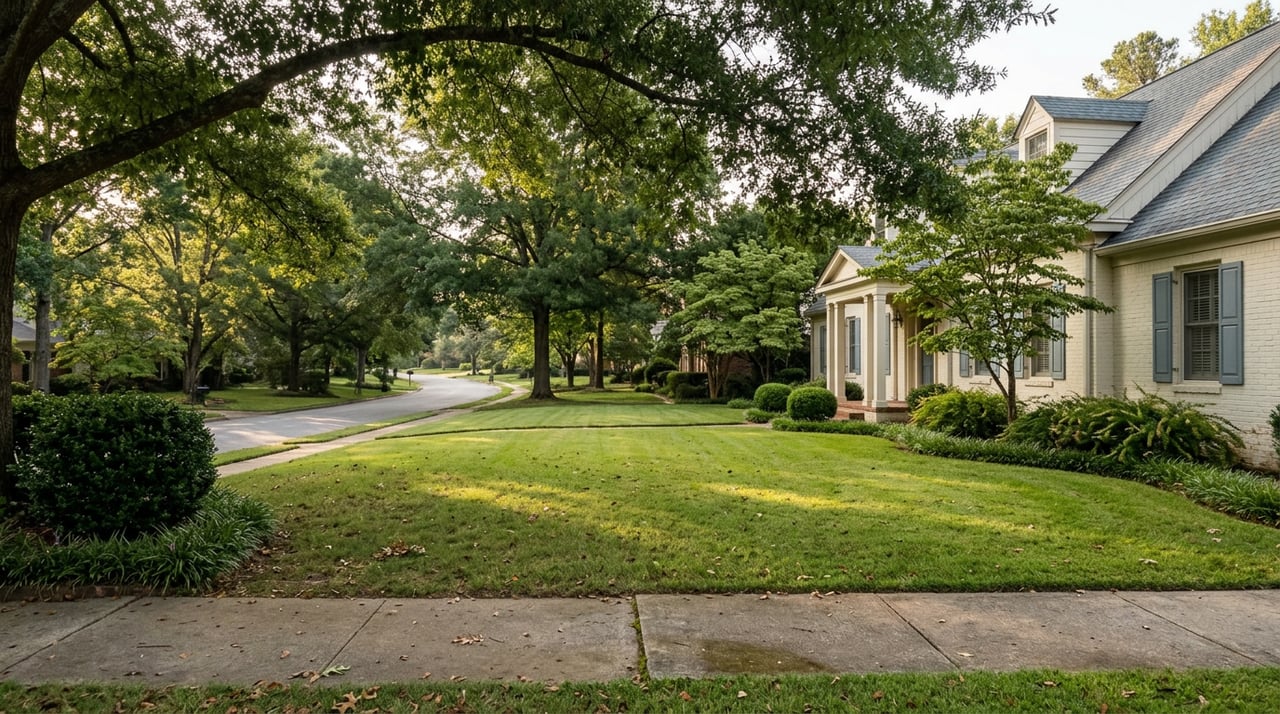
Take away the orange cones, the CMPD officers stationed at intersections, and the medical tents, and the Booty Loop reverts to what it's been for decades: a stretch of sidewalk under old oaks that Myers Park residents use for a run before work, a stroller walk after dinner, or a bike commute to Queens University's campus. No signage announces it. No one checks a membership card. It works because it's just there, the same way it was there before anyone called it the Booty Loop or built a charity around it.
Runners looking for more distance tack on Freedom Park, which sits close enough to make a natural add-on and turns a three-mile loop into something closer to five. Freedom Park itself spans nearly 100 acres and centers on a lake that draws families and dog walkers on its own, so the loop doesn't dead-end into itself. It connects to something bigger if you want it to, and it stays exactly three miles if you don't.
That flexibility, more than the race, is what makes the loop function as daily infrastructure instead of a novelty. A neighborhood amenity that only works one weekend a year isn't really an amenity. This one works on a Tuesday in August with nobody watching, which is the actual test.
Here's a data point that says more about the loop's daily pull than any race-day headcount: a Lagree fitness studio opened this year at 2909 Selwyn Avenue, right on the loop itself, according to Axios Charlotte's tracker of new business openings. A boutique studio doesn't plant itself on a specific three-mile stretch of sidewalk by accident. It plants itself there because the foot traffic already exists, every day, independent of any charity calendar.
That's the kind of signal that tells you more about a neighborhood than a race recap does. Businesses don't build around a weekend. They build around a routine. The studio's location is a bet that the people circling that loop on a random Wednesday are worth designing a business around, and that bet says something about how consistently used this stretch of pavement actually is.
A few minutes off the loop, on Ridgewood Avenue, sits Wing Haven Garden and Bird Sanctuary, open Wednesday through Saturday from 10 a.m. to 5 p.m. The garden runs more than 40 programs and special events a year, from seasonal story times for kids to garden tours and evening tastings, and it's the kind of place a lot of longtime residents drive past without ever walking into. If your usual loop lap ends near Ridgewood, it's worth the ten minutes.
For a sit-down meal near the finish line, Napa on Providence has anchored the corner of Perrin Place since 2012. Owners Jeff and Paula Conway rolled out a new menu this spring, swapping in dishes like mushroom sugo and fried chicken while keeping longtime favorites like the gnocchi, and the patio still ranks among the best in the city on a warm evening. Fourteen years is a long run for any independent restaurant in a city that reinvents its dining scene every few years, and it says something that the room built around Booty Loop regulars is the one still standing.
Twenty-five years in, the numbers tell a clear story: one rider became 900, zero dollars became $33 million, and a neighborhood loop became a national fundraising fixture that pulls participants from 22 states. None of that required the loop itself to change. It's still the same three miles of Queens Road West, Selwyn Avenue, and Queens Road that neighbors used before the race existed and will use again next Tuesday, long after Bootyville gets packed up and the porch lights go back to normal.
That's the part worth knowing if you live here, and it's not something a race recap or a neighborhood ranking list will tell you. The loop's fame and its daily function have quietly split apart, and that split is exactly why it still works. It never had to become exclusive or overmanaged to become famous. It just kept being a sidewalk under old trees that anyone can use, which is a rarer thing in a growing city than most people realize.
If you're weighing a move to Myers Park, or you already live here and want a clearer read on what's happening block by block, I'm always glad to talk through it. Gary Burkart has spent years watching this neighborhood work exactly the way it's supposed to. Talk to me FIRST.
Stay up to date on the latest real estate trends.